
Brushless Motors BXII Series
BXSD60-C
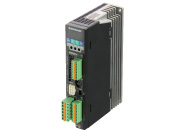
Control Circuit
This product is currently no longer available for sale.
| Product Classification | Product Name | List Price | Shipping Date |
|---|---|---|---|
| Control Circuit | BXSD60-C | - | Discontinued Product (31.3.2022 discontinued) |
Included
- Control Circuit: Conversion Cable, Connector for CN1, Connector for CN5, Connector for CN7, Mounting Bracket for Control Circuit (with Screws)
Specifications
Data Download
Other Specifications
General Specifications
| Item | Motor | Driver | |
|---|---|---|---|
| Insulation Resistance | 100 MΩ or more when a 500 VDC megger is applied between the windings and the case after continuous operation under normal ambient temperature and humidity. (Except for the encoder) |
After continuous operation at normal ambient temperature and humidity, the measurement value between the power supply terminal and the protective earth terminal or the power supply terminal and the signal I/O terminal is 100 MΩ min. using a 500 VDC megger. |
|
| Dielectric Strength | No abnormality is observed even with an application of 1.5 kVAC at 50 Hz between the coils and the case for 1 minute after continuous operation at normal ambient temperature and humidity. (Except for the encoder) |
After continuous operation at normal ambient temperature and humidity, no abnormality is observed even if 50 Hz, 1.5 kVAC is applied between the power supply terminal and the protective earth terminal, and 50 Hz, 1.5 kVAC is applied between the power supply terminal and the I/O signal terminal for 1 minute. |
|
| Temperature Rise | After continuous operation at normal ambient temperature and humidity, the temperature rise of the windings measured by the thermocouple method is less than 50° C, and the measured temperature rise on the case surface is less than 40 °C*1. |
After continuous operation at normal ambient temperature and humidity, the measurement value of the temperature rise of the heat sink is 50 °C max. using the thermocouple method. (60 °C max. when 200 W and 400 W types are installed in contact with each other) |
|
| Operating Environment*2 | Ambient Temperature | 0~+50 °C (Non-freezing) | 0~+50 °C (Non-freezing)*2
0~+40 °C for 200 W and 400 W types when mounted close together |
| Ambient Humidity | 85 % max. (Non-condensing) | ||
| Altitude | Less than 1000 m above sea level | ||
| Atmosphere | No corrosive gases or dust Cannot be used in a radioactive area, magnetic field, vacuum, or other special environments. |
||
| Vibration | Not subject to continuous vibration or excessive shock In conformance with JIS C 60068-2-6, "Sine-wave vibration test method" Frequency Range: 10~55 Hz, Single Amplitude: 0.15 mm, Sweep Directions: 3 directions (X, Y, Z), Number of Sweeps: 20 |
||
| Storage Conditions*3 | Ambient Temperature | -20~+60°C (Non-freezing) | -25~+70°C (Non-freezing) |
| Ambient Humidity | 85 % max. (Non-condensing) | ||
| Altitude | Less than 3000 m above sea level | ||
| Atmosphere | No corrosive gases or dust Should not be exposed to water or oil. Cannot be used in a radioactive area, magnetic field, vacuum, or other special environments. | ||
| Thermal Class | UL/CSA Standards: 105 (A), EN Standards: 120 (E) | − | |
| Degree of Protection | IP54 (Excluding the installation surface of the round shaft type and connectors) | IP20 | |
- *1
- Attach round shaft types to a heat sink (Material: aluminum) of one of the following sizes to maintain a motor case surface temperature of 90 °C max.
30 W Type: 115×115 mm, 5 mm thickness, 60 W Type: 135×135 mm, 5 mm thickness, 120 W Type: 165×165 mm, 5 mm thickness,
200 W Type: 200 × 200 mm, 5 mm thickness 400 W Type: 250 × 250 mm, 6 mm thickness - Characteristics *2
- Install the driver to a location that has the same heat radiation capability as an aluminum metal plate.
Single mounting: 200 x 200 mm, 2 mm thick
Close Mounting 350x350 mm, 2 mm thickness
For 200 W and 400 W types: Load factor is 90% or less when using driver mounting brackets or DIN rail mounting brackets (sold separately). - *3
- The value for storage condition applies to short periods such as the period during transport.
- Do not measure insulation resistance or perform a dielectric strength test the motor and driver are connected.
close