
What is the Difference Between Brushed and Brushless Motors?
As at 8 July 2026
Electric motors have become an integral part of modern devices, machines and vehicles. Manufacturers and users are often faced with the question: Should a brushed or a brushless motor be used? Both types of motor convert electrical energy into mechanical motion, but differ significantly in terms of design, maintenance requirements, efficiency and service life.
In this article, you will learn about the key differences, the respective advantages and disadvantages, and the typical applications of brushed and brushless motors.
What is a Brushed Motor?
A brushed motor (brushed DC motor) has carbon brushes and a commutator. These components ensure that the flow of current within the motor is continuously reversed. This maintains the magnetic field and causes the rotor to rotate.
The brushes are in constant mechanical contact with the commutator. Whilst this contact allows for a simple design, it does, however, result in friction and wear.
Advantages of Brushed Motors
- - Low purchase costs
- - Simple controls
- - Tried-and-tested, robust technology
- - Easy replacement and straightforward integration
Disadvantages of Brushed Motors
- - Increased wear due to brush abrasion
- - Regular maintenance required
- - Lower efficiency
- - Increased heat generation
- - Noisy operation caused by mechanical contacts
What is a Brushless Motor?
A brushless motor (brushless DC motor or BLDC motor) operates without carbon brushes or a commutator. Instead, the current is switched electronically by a controller, which detects the position of the rotor and controls the windings accordingly.
As there are no mechanical contacts, there are significantly fewer friction losses and virtually no wear in the commutation area.
Advantages of Brushless Motors
- - High energy efficiency
- - Long service life
- - Low maintenance requirements
- - Low operating noise levels
- - High power density
- - Precise speed and torque control
Disadvantages of Brushless Motors
- - Higher acquisition costs
- - More complex electronics are required
- - More complex control system
Brushed vs. Brushless Motors: A Direct Comparison
| Criterion | Brushed Motor | Brushless Motor |
|---|---|---|
| Structure | With brushes and a commutator | Electronic commutation |
| Maintenance | Required on a regular basis | Virtually maintenance-free |
| Service Life | Limited by brush wear | Very high |
| Efficiency | Lower | Higher |
| Noise Level | Higher | Low |
| Acquisition Costs | Cheaper | More expensive |
| Controllability | Simple | Very precise |
| Power Consumption | Higher | Lower |
Where are Brushed Motors Used?
Despite the increasing prevalence of BLDC technologies, brushed motors continue to be used in numerous applications. They are particularly suitable for cost-sensitive projects or applications with a limited service life.
Typical areas of application:
- - Power tools
- - Toys
- - Household appliances
- - Window regulators in the automotive sector
- - Conveyor technology with simple requirements
Where are Brushless Motors Used?
Brushless motors really come into their own where high efficiency, a long service life and precise control are required.
Typical areas of application:
- - Electric vehicles
- - Drones
- - Robotics
- - Automation technology
- - Industrial drive systems
- - Medical technology
- - Fans and pumps designed for continuous operation
- - CNC machines
Which Type of Motor is the Better Choice?
The choice between a brushed and a brushless motor depends largely on the requirements of the application in question.
A brushed motor is often the right choice when low purchase costs and simple control are the main priorities. For applications with limited operating times, this technology can make economic sense.
A brushless motor, on the other hand, offers the advantages of greater efficiency, a longer service life and lower running costs. Particularly in the case of continuous operation or demanding industrial applications, the higher initial investment costs are often recouped within a short period of time.
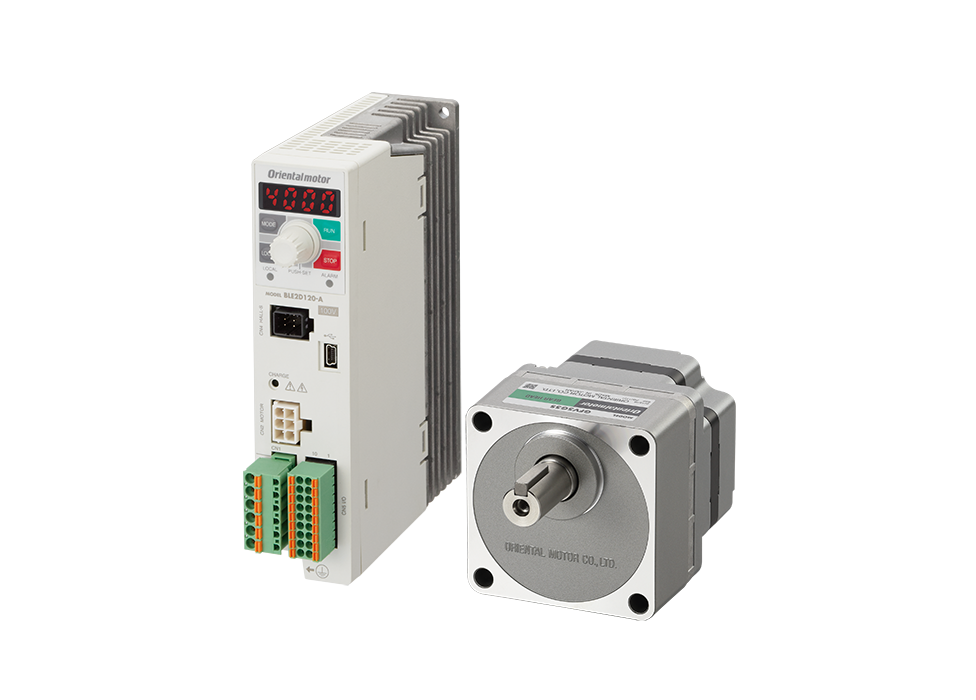
Overview of Oriental Motor's brushless motors
Conclusion
The main difference between brushed and brushless motors lies in the type of commutation. Whilst brushed motors operate using mechanical brushes, which causes wear and tear, brushless motors use an electronic control system, thereby achieving greater efficiency and a significantly longer service life.
Brushless motors are therefore becoming increasingly prevalent in modern applications in industry, automation, electromobility and robotics. However, brushed motors remain a cost-effective solution for simple and cost-sensitive applications.
A brushless motor, on the other hand, offers the advantages of greater efficiency, a longer service life and lower running costs. Particularly in the case of continuous operation or demanding industrial applications, the higher initial investment costs are often recouped within a short period of time.
In short: If you are looking for maximum efficiency, reliability and low maintenance, a brushless motor is usually the better choice in the long term. If, on the other hand, you need a cost-effective and straightforward drive solution, a brushed motor remains a tried-and-tested alternative.