
Case Study of High Flow Rate Pumping and Flow Adjustment
Issue
Increasing the Flow Rate
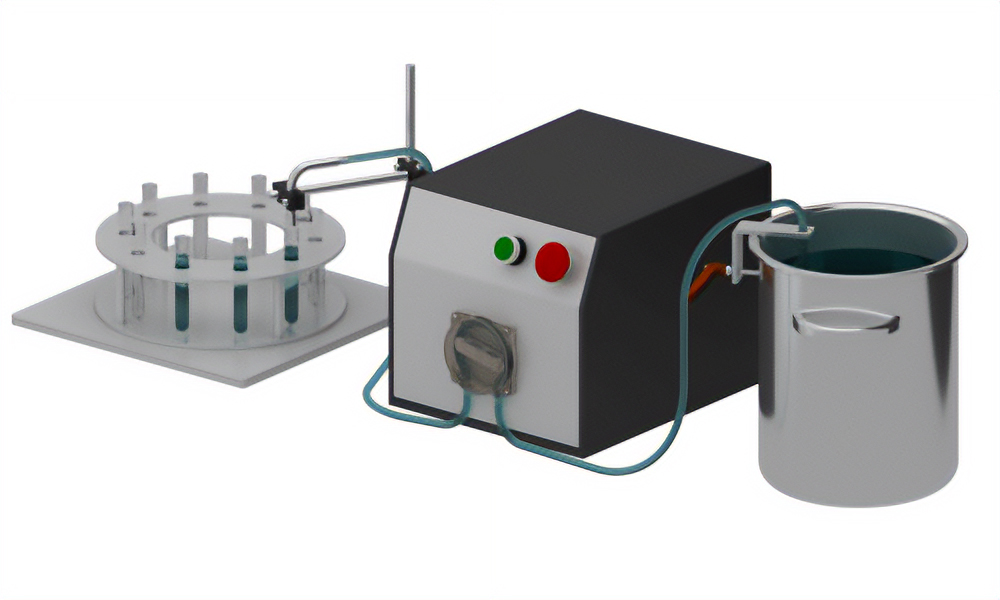
Conventional Equipment
A piece of equipment that exhausts a constant and accurate amount of liquid using a stepper motor with DC input.
- Application
- Reagent Manufacturing
Conventional Problems
- To increase the feed amount, the speed must be increased, but the torque is insufficient
Solution
Stepper Motor RKII Series
Increased Torque at High Speeds and Achieving a High Flow Rate
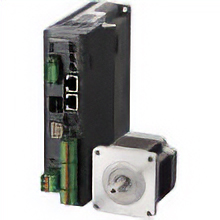
The AC input stepper motor RKII Series has superior torque characteristics in the high-speed range compared to DC input motors. As a result, the feed speed of the load can be increased while the size of the motor remains the same.
Specific Application Examples
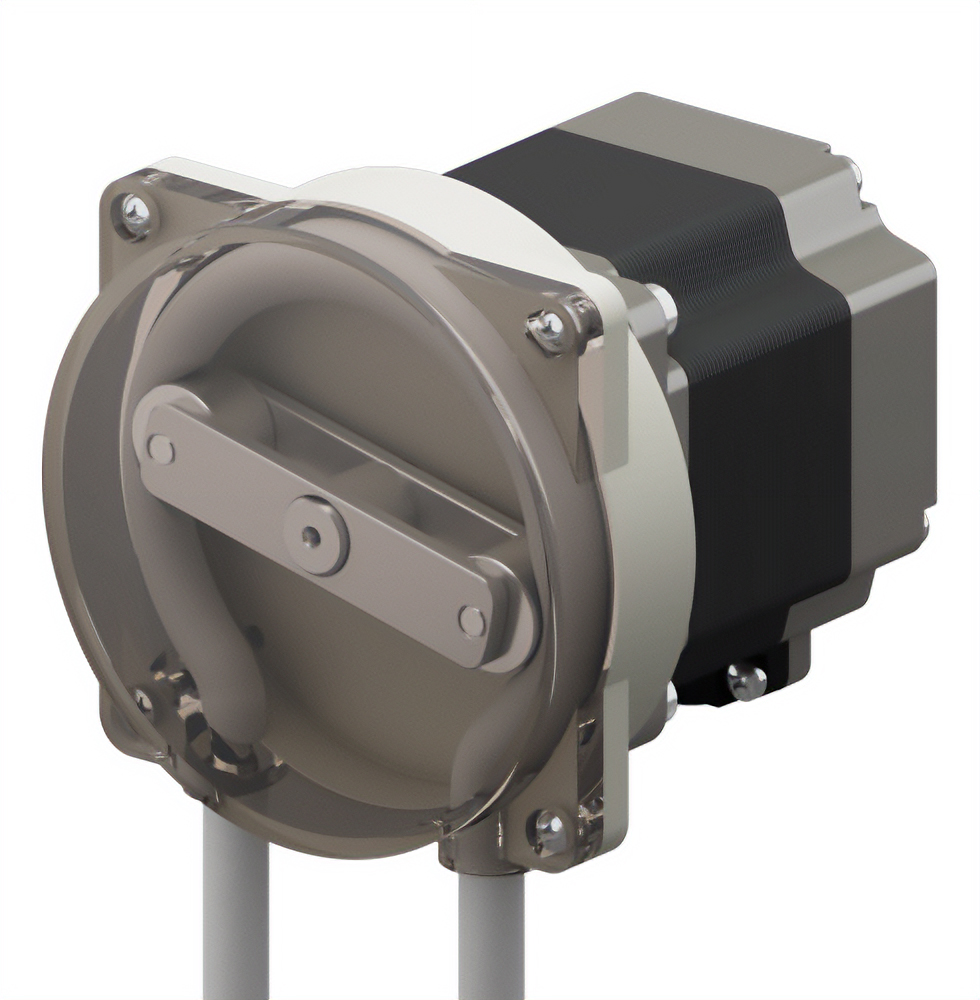
Demonstrating Torque at High Speeds
AC input type stepper motors can carry the rated current even in the high speed range and have superior torque characteristics compared to DC power supply type.
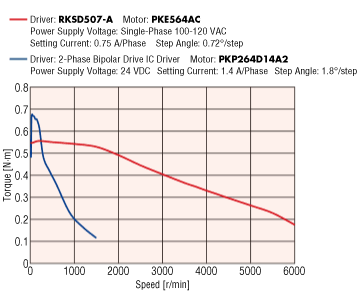
Since motor torque and current value are proportional to each other, if you want to obtain high torque, you need to increase the current value as well.
In the RKII Series, the driver rectifies the AC power supply (100 VAC, 200 VAC) to 280 VDC and applies it to the motor.
By increasing the applied voltage, the rise of the current is sped up and the torque in the high-speed range is secured.
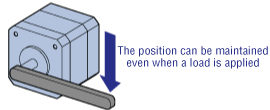
The Load Can Be Held While Stopped Same As DC Input
Since the AC power supply is rectified to DC and supplied to the motor, it has stable holding torque even when stopped and prevents backflow of liquid.
The value of holding torque at motor standstill can be adjusted by setting the driver's stop current.
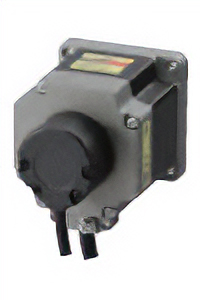
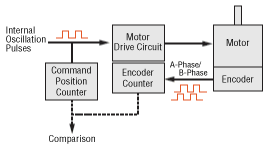
Check Flow Rate With Encoder-Equipped Type
Using a motor with an encoder enables operations such as monitoring the present position and detecting position errors.
This contributes to improved equipment reliability by early detection of problems that may affect the load's feed amount.
A list of product introduction case studies and proposals that solve issues such as improving reliability, space saving, and noise reduction for medical and analytical equipment have been compiled.